Contestants on the TV show The Biggest Loser were part of a surprising discovery six years after their season ended. In a 2016 follow-up study, researchers found they were burning about 500 fewer calories at rest than expected for people their size. Their bodies were actively defending against the weight loss. Even when someone is …

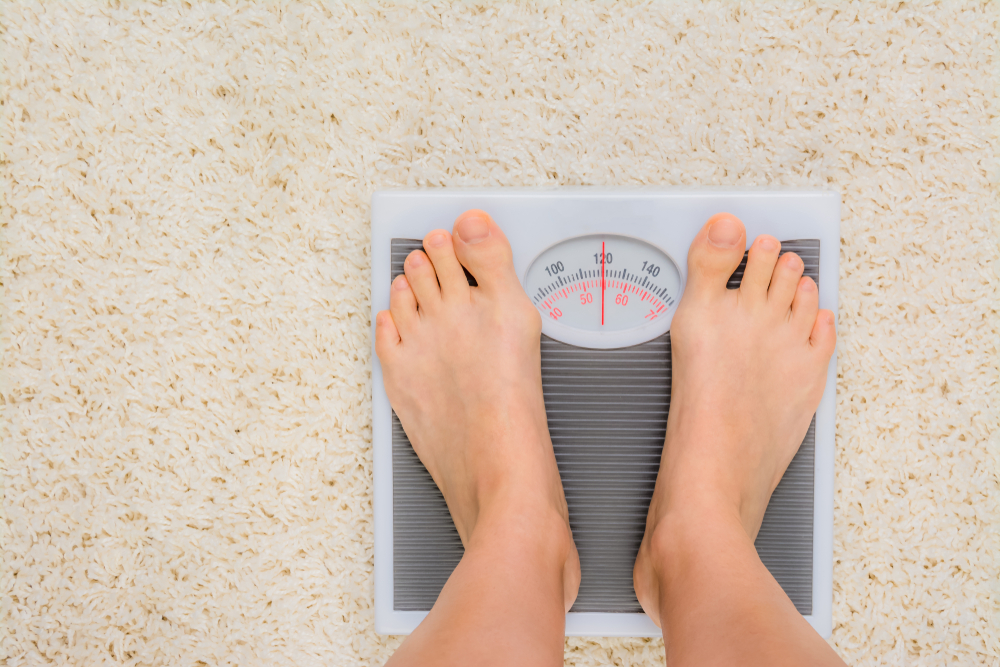
Contestants on the TV show The Biggest Loser were part of a surprising discovery six years after their season ended. In a 2016 follow-up study, researchers found they were burning about 500 fewer calories at rest than expected for people their size.
Their bodies were actively defending against the weight loss. Even when someone is eating well and exercising, weight loss plateaus can happen as the body settles into a new equilibrium.
This stall isn’t due to a lack of willpower, but is a normal part of the process. Understanding why your body pushes back is the fastest way to restart progress, and nutrition counseling can turn that knowledge into a plan.
A Smaller Frame Runs on Less Fuel
Each pound you lose lowers the calories your body needs, both at rest and during activity. A smaller frame simply needs less fuel to keep losing.
Your metabolism also slows through adaptive thermogenesis, a decrease beyond what your new size alone would predict. Your new calorie target may be even lower than you calculated.
Everyday movement often drops too, quietly trimming the calories you burn outside of workouts.
Lost Muscle Makes Weight Loss Plateaus Stickier
Muscle burns more calories at rest than fat does. When dieting strips away muscle, your resting metabolic rate drops even further.
A calorie-restricted diet with too little protein and no resistance training makes that loss more likely.
A DEXA scan shows whether you’ve lost muscle and gives you an accurate picture to guide future workouts and nutrition.
Hunger Hormones Start Pushing Back
Here’s the twist. Fat tissue produces leptin, the appetite-suppressing hormone, so leptin levels typically fall as fat shrinks.
Meanwhile, ghrelin, the appetite-stimulating hormone, tends to rise. That increases hunger right when you’re working hardest to lose weight.
Portions often creep up without you realizing it. Tracking everything you eat for seven to 14 days reveals how your habits have shifted.
Water and Sodium Can Hide Real Progress
The scale also measures the water in your body. A salty dinner, a hard workout, or even hormones can make you weigh more for days.
Each gram of stored carbohydrate holds several grams of water, so carb intake can swing the number too. Your waist measurement or the fit of your clothes is a steadier gauge, and a body composition test shows even better where you’re losing.
Sleep and Stress Quietly Raise the Bar
Sleeping too little affects weight loss from several angles. In one controlled study, dieters lost less fat when averaging 5.5 hours of sleep per night than when they averaged 8.5 hours.
Stress adds cortisol, which can drive cravings and make sticking to a plan harder. Rest is a legitimate strategy to pursue alongside diet.
Breaking Weight Loss Plateaus With Real Numbers
Online calorie calculators estimate your needs with formulas. PNOĒ metabolic analysis measures your breath to reveal your true resting metabolic rate.
It also shows whether you burn more fat or more carbohydrates for fuel. Combined with DEXA data, these results create a real plan of action for weight loss plateaus rather than a guessing game.
Where Medical Support Fits
Medically supervised GLP-1 medications such as tirzepatide help decrease hunger and improve blood sugar. Even then, progress typically levels off at some point.
Eating enough protein and doing resistance training remain essential to preserve your hard-earned muscle. A provider can determine whether medication makes sense based on your medical history and goals.
Test Your Metabolism and Restart Your Progress. Call Our Clinic Now to Book Your Consultation
The longer a stall lasts, the easier it becomes for old habits to creep back in. At Ultra Body Sculpt + Longevity in Arlington, VA, our team can test your metabolism and give you specific feedback to help you break through.
Contact us online or reach out to Ultra Body Sculpt directly at 703-988-2000. You can also schedule your appointment online if that makes things easier for you.
Meet the Woman Who Can Curb Your Weight Loss Plateaus: Amparo Rosen
Founder & CEO, Ultra Body Sculpt + Longevity | Arlington, VA
Amparo Rosen is a licensed esthetician, advanced body recomposition specialist, and the visionary founder of Ultra Body Sculpt + Longevity in Arlington, Virginia. What began as a personal journey to solve her own complex health challenges evolved into an innovative wellness center bridging advanced medical aesthetics with data-driven biohacking and longevity science.
Specialized Training & Multidisciplinary Background
Amparo combines cutting-edge clinical technology with deep metabolic insights:
- Academic & Nutrition Education: Nutrition Science via the Stanford Center for Health Education (Stanford Medicine) and Executive Education in Sustainable Nutrition at Harvard Medical School.
- Functional Wellness & Peptides: Formal peptide certification through the Seeds Scientific Research & Performance Institute (SSRP) and ongoing training as a Functional Health Practitioner.
- Advanced Modalities: Master-level certifications in advanced laser systems, body contouring (Emsculpt NEO®, Sofwave, Cryoslimming), phlebotomy, and cellular recovery (PEMF, photobiomodulation, and vibroacoustic therapy).
By integrating objective diagnostics—such as DEXA body composition scans, metabolic analysis, and biomarker data—Amparo crafts personalized, non-invasive protocols designed to transform body composition, cellular vitality, and lifelong health.